

Antennas based on fractal mathematics offer some significant advantages but also some controversy. Although all antenna designs are derived from either the basic dipole or monopole/ground-plane configurations, there are almost countless antenna variations in use (Figure 1). Each one offers a different combination of key attributes such as center frequency, bandwidth, bandwidth, side lobes, front-to-back […]
Zero-drift amplifiers finesse ultralow-frequency signals, Part 3
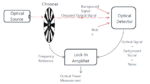
Modern zero-drift amplifiers provide the extremely low drift and noise performance, needed for processing many optical biological, and physical-world signals near 0 Hz. Contrary to what you might think, mechanical chopping is still alive and useful. Given the outstanding performance of electronic components, using a high-performance zero-drift amplifier seems the way to go. That is […]
Zero-drift amplifiers finesse ultralow-frequency signals, Part 2
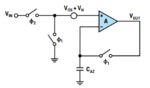
Modern zero-drift amplifiers provide the extremely low drift and noise performance needed for processing many optical biological, and physical-world signals near 0 Hz. The ultimate limitations of chopping led designers to investigate another approach called auto-zeroing, which is especially feasible with integrated circuits. This is a dynamic correction technique that works by sampling and subtracting […]
Zero-drift amplifiers finesse ultralow-frequency signals, part 1
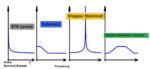
Modern zero-drift amplifiers provide the extremely low drift and noise performance needed for processing many optical biological, and physical-world signals near 0 Hz. In our world of ever-faster, wider-bandwidth signals and systems operating at higher and higher frequencies, it may seem that signals in the very-low-frequency range — down towards zero hertz (0 Hz) — […]
Minimizing electrical noise to improve medical-ultrasound images, Part 3
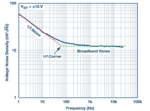
Low-noise circuitry is critical to image quality of medical ultrasound, an indispensable diagnostic tool. Efficiency versus noise It may seem that if there is a tradeoff between power-supply noise versus potential efficiency, the need for ultralow noise in the ultrasound application should prevail. After all, a few more tens of milliwatts of dissipation should not […]
Minimizing electrical noise to improve medical-ultrasound images, Part 2
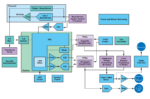
Low-noise circuitry is critical to image quality of medical ultrasound; an indispensable diagnostic tool. Despite the conceptual simplicity of the underlying principle, a complete, high-end ultrasound imaging system is a complicated device (Figure 1). The ultimate performance of the system is largely determined by the transducer and analog front end (AFE), while post-processing of the […]
Minimizing electrical noise to improve medical-ultrasound images, Part 1

Low-noise circuitry is critical to the image quality of medical ultrasound, an indispensable diagnostic tool. Ultrasound technology, a widely used non-invasive tool in medical diagnostics and other applications, has shifted from static to dynamic images and from black-and-white to color Doppler images. These important enhancements are largely due to the introduction of digital ultrasound technology […]
When reality intrudes on component models and equivalent circuits
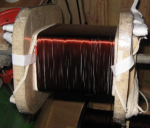
Determining the utility of an equivalent-circuit model versus construction reality is often a difficult challenge. Using simplified, first-order approximations in models and equivalent circuits is a normal part of engineering life. Without them, we would get mired in the details and harsh reality of the components and their characteristics. We would never be able to […]
What are digital twins, and where are they on the “hype cycle”?: part 2

Digital twins are getting lots of deserved attention, but are they the cure-all for whatever simulation issues you have? Although digital twins are undoubtedly valuable tools along with basic simulation, modeling, HITL, and others, the associated all-good/no drawbacks promotion concerns me. When a tool, product, or other development gets a lot of “pumping up” to […]
What are digital twins, and where are they on the “hype cycle”?: part 1
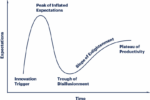
Digital twins are getting lots of deserved attention, but are they the cure-all for whatever simulation issues you have? Lately, I’m seeing what are called “digital twins” cited everywhere. What is a digital twin? In addition to having that very catchy name, it is a highly advanced model of the system which can be used […]
