

An EMC test is known as Electromagnetic compatibility, a certification for electronic devices to maintain their limitation of electromagnetic waves. As discussed in the previous article, there are two types of EMC tests: emission (EMI) and immunity (EMS). EMI (Electromagnetic Interference) tests measure the magnetic waves emitted by the device, and EMS (Electromagnetic Susceptibility) tests […]
The basics: what is EMC?
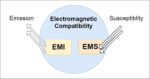
EMC stands for Electromagnetic compatibility, which means that a device is compatible with (i.e., no interference is caused by) its electromagnetic (EM) environment. It does not emit levels of EM energy that generate electromagnetic interference (EMI) in other devices in the vicinity. Electromagnetic interference (EMI) is the interference caused by one electrical or electronic device […]
3D printing for 5G systems

MIMO antennas, waveguides, traveling wave tubes, and RF substrates are fabricated using various 3D printing technologies. For example, 3D printing has been used to produce highly dense and integrated waveguide signal interconnects modules in a single monolithic unit. By printing the waveguide modules in one component, the part count was significantly reduced from tens or […]
What are the applications of 3D and 4D printed electronics?
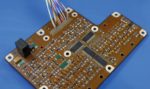
3D printing is the fabrication of a three-dimensional object under computer control, with one or more materials being added layer by layer. 3D printing, or additive manufacturing, is used across various electronics applications, including circuit boards, energy storage devices, actuators, and sensors. It can be implemented using a variety of technologies, including selective laser sintering […]
What is passive intermodulation?
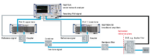
Passive intermodulation (PIM) is a pernicious and destructive phenomenon for cellular network operators. PIM shows up as a set of unwanted signals created by mixing two or more strong RF signals. Mixing generally produces the sum and difference frequencies of the two transmit signals F1 and F2. These signals are F1 + F2 and F1 […]
What is second-generation beamforming and digital beamforming?

Beamforming is an established technology for cellular communications and other applications (see the previous article on “What is beamforming?”). Beamforming was initially developed based on various analog signal chain techniques and processes. In general, beamforming combines antenna array elements to direct signals at controlled angles to maximize signal reception at specific receivers. Analog beamforming can […]
What is beamforming?

Beamforming is used in various applications, including sensor arrays, radar, biomedicine, WiFi, and wireless communications. It is an active approach that combines antenna array elements to direct signals at specific angles and create constructive interference. In contrast, other signals are subjected to destructive interference to maximize signal transmission and/or reception. Beamforming can improve the spatial […]
What is precoding and what are the benefits?

Precoding is the transmitter signal processing needed to affect the received signal’s maximization to specific receivers and antennas while reducing the interference to all other receivers and receiving antennas. Precoding involves preprocessing of the transmit signal in an RF system. As described below, precoding uses channel state information at the transmitter to improve performance and […]
What is the difference between current feedback and voltage feedback op amps?
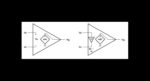
Current feedback (CFB) operational amplifiers (op amps) and voltage feedback (VFB) op amps have almost as many similarities as differences. CFBs and VFBs both have inverting and non-inverting inputs, a signal output, inputs for positive and negative voltage supplies and use feedback and gain resistors to stabilize circuit operation and set circuit gain. That can […]
What is pseudorandomness and why is it useful?

Pseudorandomness is a measurement of the degree to which a sequence of numbers, though appearing to be random, is produced by a deterministic and repeatable process. True randomness is a stochastic quality of a sequence which has a probability distribution or pattern that may be analyzed statistically but may not be predicted precisely. Pseudorandom sequences […]
