

NOVOSENSE Microelectronics has launched its new NSOPA series of general-purpose operational amplifiers. Engineered for automotive and industrial applications, these amplifiers can be widely used for signal conditioning of voltage, current, temperature, and other signals, OBC/DC-DC/PDU, traction inverters, BMS, thermal management, BCM, industrial automation, photovoltaic inverters, motor drivers, digital power supplies and charging stations. The inaugural […]
Amplifiers
Ultra-low noise, 5 to 6 GHz LNA for receiver applications in the C-band

Guerrilla RF, Inc. announces the formal production release of the GRF2110, an ultra-low noise amplifier that delivers an exceptionally flat gain response over a single 5 to 8 GHz broadband tune. When operated at 6 GHz, the device delivers 16.3 dB of gain, 22 dBm of OP1dB compression, 38 dBm of OIP3 linearity, and a low […]
Design an analog front end for a pH probe
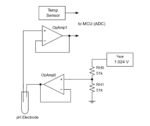
pH probes, with their bipolar voltage outputs and high output impedance, need signal conditioning through an analog front end to make them compatible with measurement circuits such as A/D converters. By Marian Hryntsiv, Renesas Electronics People who work in healthcare, food and beverage, water treatment, chemical processing, agriculture, and environmental monitoring rely on pH meters […]
Dual op-amp boosts sensor signals

STMicroelectronics’ TSB182 dual operational amplifier is featured for high-accuracy signal conditioning with sensors, including maximum 20µV input offset voltage, 100nV/°C drift over temperature, and 4V-36V operating range for medium-voltage applications. In addition to its high accuracy, stability, and wide supply-voltage range, the TSB182 is specified from -40°C to 125°C. With a maximum offset voltage of 30µV over […]
Automotive, industrial op-amps operate to 175C

STMicroelectronics’ TSZ181H1 and dual TSZ182H1 automotive-qualified operational amplifiers (op amps) deliver high accuracy and stability over a wide (-40°C to 175°C) temperature range. The high maximum operating temperature encourages use in harsh environments and in applications with long mission profiles. The op amps have very low input offset voltage, typically 3.5µV at 25°Cm, and input bias current, typically 30pA […]
PC-specific audio device combines smart amplifier and low-power codec
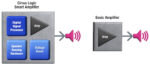
Cirrus Logic announced today a premium audio solution built specifically for PCs that enables a louder, more immersive audio experience, whether listening to voice calls and music from the small internal speakers on ultrathin laptops or from headphones. Cirrus Logic’s PC-optimized audio solution includes the Cirrus Logic CS35L56 smart amplifier packed with processing power to […]
Zero-drift amplifiers finesse ultralow-frequency signals, Part 3
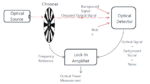
Modern zero-drift amplifiers provide the extremely low drift and noise performance, needed for processing many optical biological, and physical-world signals near 0 Hz. Contrary to what you might think, mechanical chopping is still alive and useful. Given the outstanding performance of electronic components, using a high-performance zero-drift amplifier seems the way to go. That is […]
Zero-drift amplifiers finesse ultralow-frequency signals, Part 2
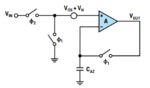
Modern zero-drift amplifiers provide the extremely low drift and noise performance needed for processing many optical biological, and physical-world signals near 0 Hz. The ultimate limitations of chopping led designers to investigate another approach called auto-zeroing, which is especially feasible with integrated circuits. This is a dynamic correction technique that works by sampling and subtracting […]
Zero-drift amplifiers finesse ultralow-frequency signals, part 1
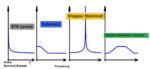
Modern zero-drift amplifiers provide the extremely low drift and noise performance needed for processing many optical biological, and physical-world signals near 0 Hz. In our world of ever-faster, wider-bandwidth signals and systems operating at higher and higher frequencies, it may seem that signals in the very-low-frequency range — down towards zero hertz (0 Hz) — […]
6MHz rail-to-rail op amps boost performance in industrial and automotive apps

STMicroelectronics is simplifying designers’ search for high-performing operational amplifiers (op amps) by introducing three new 6MHz rail-to-rail devices with strong all-around parameters including a wide operating voltage range and low noise. The TSB511, TSB512, and TSB514 are single, dual, and quad op amps, respectively. They can operate from a single supply in the range from 2.7V to […]
