

Resistance is one of the most basic concepts in electricity and electronics. And resistors are simple-looking devices. Given their apparent simplicity, the range of resistor types and their capabilities can be surprising. This FAQ looks at some common resistor types and tradeoffs between stability, precision, size, power handling, and so on. It briefly considers mounting […]
What’s the difference between equalizers?
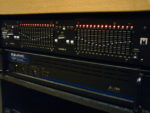
Equalizers are used to alter the performance of signal chains. In some cases, that means linearizing signal chain performance. In other cases, equalizers are used to introduce nonlinearities. As a result, equalizer designs vary widely from simple passive circuits to complex multi-stage designs and active circuits. This FAQ reviews equalizer basics, looks at equalizers for […]
How does a precision rectifier work?
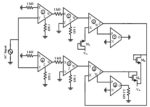
A precision rectifier, sometimes called a super diode, is an op amp circuit designed to behave like an ideal diode and is used in high-precision signal processing applications. It’s not a synchronous rectifier. The op-amp-based precision rectifier should not be confused with power MOSFET-based synchronous rectification. Because there is no diode voltage drop between the […]
What do you do with a bucket brigade device?
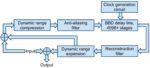
A bucket brigade device (BBD) is a discrete-time analog delay line using capacitors that has been replaced in most digital signal processing applications. But it continues to be used in some specialty applications such as guitar and audio sound effects and some types of sensors. It consists of a series of capacitance sections where a […]
What’s a logarithmic resistor ladder good for?
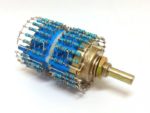
A logarithmic resistor ladder consists of a resistor string and switches designed to attenuate a signal. The state of the switches can be considered to represent a digital code proportional to the logarithm of the attenuation ratio. Logarithmic attenuation is useful when a large dynamic range is needed. Audio volume control and fading/balancing audio signals […]
Where do you use A, B, AB, D, G, DG and H circuits?

This selection of power amplifier classes is used to strengthen AC signals. The letter symbols differentiate between amplifier types and indicate the expected performance and characteristics. Basic amplifier classes such as A, B, AB, and C relate to the time that the amplifier is operating, or conducting, expressed as a fraction of the period of […]
What causes noise in analog designs and how can it be controlled?

Controlling noise in analog and mixed-signal circuits is important but not simple. Data integrity is dependent on controlling noise in the signal chain. If left uncontrolled, noise can impair or disrupt system operation. This FAQ starts by looking at the various sources and types of noise, looks at how noise can enter the signal chain […]
Five considerations for mixed-signal PCB layouts

Printed circuit board (PCB) layout is an important activity when developing mixed-signal applications. A lot can go wrong, and everything needs to be correct for a successful design. Impedance control is an obvious consideration, but it needs to include trace resistance as well as parasitic inductances and capacitances. Maintaining signal integrity can be challenging. This […]
When is a high CMRR needed in an op amp?

Common mode rejection ratio (CMRR), also called common mode rejection (CMR), quantifies the ability of an operational amplifier (op amp) to reject common-mode signals. Common-mode signals are signals that appear simultaneously and in phase on both inputs. This FAQ begins by defining what CMRR is and how it’s quantified, reviews some design considerations related to […]
What is PSRR and why is it important in op amps and LDOs?

The power supply rejection ratio (PSRR) describes the ability of a circuit to suppress any power supply variations from passing to its output signal and is typically measured in dB. It’s most often used with operational amplifiers (op amps), dc/dc converters, linear regulators, and low drop out regulators (LDOs). For op amps, the PSRR describes […]
